
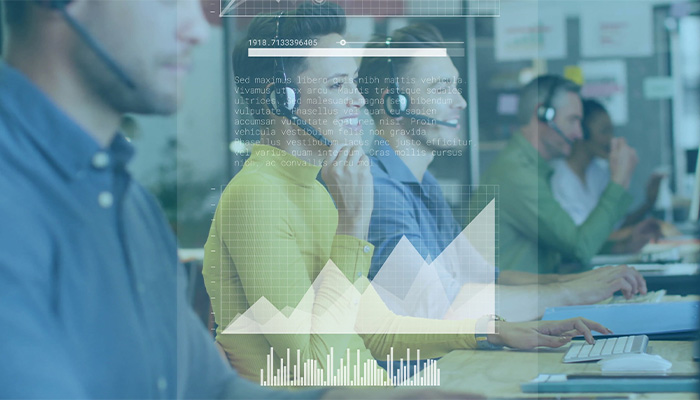
Workforce management in contact centers faces mounting complexity as customer expectations rise, interaction volumes fluctuate, and operational costs come under increasing scrutiny. Traditional workforce management approaches rely on historical data and manual scheduling processes that cannot account for real-time performance variations or the skill gaps surfacing in individual agent interactions.
The integration of call center quality monitoring and speech analytics changes this equation. Rather than reacting to performance problems after the fact, workforce managers gain continuous visibility into what agents are doing, how customers are responding, and where skill development is most needed.
Organizations implementing integrated contact center quality assurance and speech analytics for workforce management report measurable operational results: a 30% reduction in scheduling inefficiencies, a 25% improvement in agent performance metrics, and a 40% decrease in quality assurance labor requirements. These figures reflect what happens when workforce decisions draw on complete interaction data rather than sampled, delayed, or manually collected information.
The Workforce Management Challenge in Modern Contact Centers
Contact center workforce management covers scheduling, forecasting, performance tracking, and resource allocation across multiple channels and skill groups. Most workforce management systems do a reasonable job at call volume forecasting and schedule optimization. The gap is visibility into individual agent capabilities, real-time skill development needs, and quality performance patterns that only become apparent across thousands of interactions.
This visibility gap creates compounding problems. Schedulers lack reliable data about which agents excel at specific interaction types, which makes skill-based routing imprecise. Training programs operate without objective performance data, producing generic initiatives that miss individual capability gaps. Quality assurance relies on limited sampling — often 1–2% of interactions — that leaves systemic issues and agent-specific coaching opportunities undetected for weeks or months.
How Call Center Quality Monitoring Enhances Workforce Planning
Call center quality monitoring software integrated with workforce management creates comprehensive agent performance visibility that informs scheduling decisions, training prioritization, and capacity planning. When a platform analyzes 100% of customer interactions rather than the traditional 1–2% sample, the performance picture it produces is reliable enough to drive workforce decisions with confidence.
Scheduling based on actual capability
Automated quality scoring across every interaction identifies which agents handle complex or high-stakes conversations well. Workforce managers can use this data to route difficult interaction types to agents with demonstrated capability rather than relying on supervisor estimates or tenure-based assumptions.
Training prioritization based on real performance trends
Performance trend analysis across the full agent population reveals who needs additional support before quality deteriorates to a level that affects customer satisfaction. This allows training investment to concentrate where it will have the most impact, rather than following a generic calendar-based schedule.
Compliance risk detection before it escalates
Contact center quality management software flags compliance events across every interaction rather than relying on supervisors to catch violations in a small sample. In regulated industries, this is not a marginal improvement. It is the difference between a proactive compliance posture and one that discovers problems through audits or customer complaints.
What does call center quality monitoring do for workforce management?
Call center quality monitoring provides objective, interaction-level performance data that workforce managers use to make better scheduling, training, and routing decisions. Platforms that score 100% of interactions — rather than 1–2% — give supervisors an accurate picture of agent capability across all interaction types, time periods, and customer segments, enabling proactive management rather than reactive response.
Speech Analytics Applications in Contact Center Workforce Optimization
Speech analytics call center technology extracts detailed intelligence from customer conversations, identifying patterns in agent communication, customer sentiment, and interaction outcomes. This level of analytical depth supports workforce decisions that manual quality evaluation cannot provide at scale.
Contact center speech analytics reveals agent performance variations across interaction types, customer segments, and time periods. Sentiment analysis identifies agents who consistently maintain positive customer emotions versus those who need coaching on de-escalation. Topic modeling shows which agents handle technical inquiries or complex product questions effectively and which need additional knowledge support. These insights allow workforce managers to build specialized teams, adjust shift assignments based on demonstrated strengths, and develop targeted improvement programs rather than generalized training.
Speech analytics also improves capacity planning. When the platform detects increasing call complexity or new product inquiry trends earlier than volume data would indicate, workforce managers adjust scheduling and training before deteriorating performance metrics trigger the insight. This shifts the management posture from reactive to anticipatory.
Agent Performance Management Through Integrated Analytics
Call center agent performance monitoring improves significantly when quality monitoring and speech analytics provide continuous feedback rather than periodic manual evaluation. Agents receive objective data highlighting specific improvement opportunities rather than subjective supervisor assessments based on a handful of randomly selected interactions.
The operational effect is visible across several dimensions:
- Automated scoring removes evaluation bias and establishes consistent standards across all agents and supervisors.
- Real-time performance dashboards allow agents to self-monitor and adjust behaviors during a shift, not just after a formal review.
- Specific interaction examples from speech analytics make coaching conversations concrete and actionable, rather than based on generalized feedback.
- High-potential agents surface through performance data rather than supervisor familiarity, enabling more objective advancement decisions.
Retention also improves when performance recognition is grounded in data. Top performers who see their results reflected accurately are more likely to stay. Developing agents who receive specific, evidence-based feedback have a clearer path to improvement than those receiving vague guidance.
Operational Efficiency Gains Through Data-Driven Workforce Management
Integrating call center quality monitoring software with workforce management systems delivers measurable operational efficiencies. Automated interaction analysis reduces the manual workload on quality assurance teams, freeing supervisors for coaching activities that require human judgment. Performance data enables more precise forecasting, reducing the cost of overstaffing and the service impact of understaffing.
Schedule adherence improves when real-time performance monitoring identifies agents working through unusually difficult queues or showing early indicators of fatigue. Absence management benefits as well: analytics that reveal burnout risk patterns before they translate into unscheduled absences allow managers to intervene earlier.
These efficiency gains compound over time. Each cycle of data-informed workforce decisions produces a higher-quality baseline from which the next cycle operates. Organizations that instrument this feedback loop early build a structural advantage over those still managing workforce decisions from intuition and periodic samples.
Implementing Integrated Quality Monitoring and Speech Analytics
Successful implementation requires integration between systems that have traditionally been managed separately. Contact center quality assurance software must connect with workforce management platforms to enable the bidirectional data flow that supports both operational scheduling and performance improvement.
Implementation priorities that determine success:
- Define performance metrics tied to business objectives before configuring the platform, not after.
- Build automated workflows that route insights to the stakeholders who can act on them — supervisors, trainers, and workforce planners each need different views.
- Train workforce managers on analytical interpretation before expecting them to make data-informed decisions.
- Start with focused use cases that demonstrate clear value before expanding to comprehensive workforce optimization.
Change management is as important as technical integration. Agents may initially be skeptical about expanded performance monitoring. Transparent communication about how data drives supportive coaching rather than punitive evaluation is essential for adoption. Supervisors need support in transitioning from intuition-based workforce decisions to data-informed ones. Both groups tend to become advocates once they see the system surfacing accurate, useful information rather than generating noise.
Frequently Asked Questions
What is call center quality monitoring?
Call center quality monitoring is the systematic evaluation of agent-customer interactions against defined performance standards. Modern quality monitoring software analyzes 100% of interactions — voice, chat, and email — using automated scoring to provide complete visibility into agent behavior, compliance adherence, and customer experience quality. This replaces traditional manual sampling, which typically reviews less than 2% of interactions and misses most risk events and coaching opportunities.
How does speech analytics improve workforce management in contact centers?
Speech analytics for contact centers converts recorded and real-time voice interactions into structured data. Workforce managers use this data to identify agent skill strengths and gaps, detect emerging customer issues that affect staffing needs, and target coaching to the specific behaviors and interaction types where individual agents need development. The result is scheduling and training decisions informed by what agents actually do, rather than supervisory estimates.
What is the difference between quality monitoring and quality assurance in a call center?
Quality assurance (QA) typically refers to the process and framework for evaluating agent performance. Quality monitoring is the ongoing activity of capturing and scoring interactions against QA criteria. In practice, call center QA software now automates much of the monitoring work, enabling QA teams to focus on calibration, coaching, and process improvement rather than manually reviewing individual recordings.
What should I look for in call center quality monitoring software?
The most important criteria are: interaction coverage (does it score 100% of calls and digital channels?), scoring consistency (are evaluations explainable and repeatable?), coaching workflow integration (can supervisors act on insights within their normal workflow?), compliance monitoring capability, and implementation timeline. Platforms that require 6–12 month deployment timelines before producing usable data create risk. Look for solutions with defined rollout programs measured in weeks, not quarters.
How long does it take to implement contact center quality monitoring software?
Implementation timelines vary, but well-designed platforms can be operational within 30 days for most contact center environments. Full adoption — meaning supervisors and QA teams actively using the system as part of their standard workflow — typically follows within 60 days of go-live when the rollout includes structured onboarding and change management support.
The Direction of Workforce Management in Contact Centers
As AI capabilities in quality monitoring and speech analytics mature, the gap between organizations that have instrumented their interactions and those that have not will widen. Predictive analytics will forecast individual agent performance trends with enough lead time to intervene before quality deteriorates. Scheduling will incorporate real-time performance data, adjusting assignments dynamically based on current agent capability and the complexity distribution of incoming interactions.
The organizations building this capability now are doing so on the foundation of 100% interaction coverage. The analytical models improve as they process more data. The supervisors trained on data-informed decisions get better at using them. The competitive advantage is cumulative.
Quality monitoring and speech analytics move workforce management from reactive scheduling to continuous performance optimization. The outcome is not just a more efficient contact center — it is one where the quality of every customer interaction improves because the team running it has full visibility into what is happening and a clear process for acting on it.
See how QEval™ applies this to your contact center
QEval™ analyzes 100% of customer interactions across voice, chat, and email — providing the performance data contact center workforce managers need for accurate scheduling, targeted coaching, and proactive compliance monitoring.
What QEval™ delivers:
- 100% interaction scoring across voice, chat, and email — not a 1–2% sample
- Automated quality scoring with explainable criteria supervisors and agents trust
- Real-time supervisor alerts for compliance events and high-priority coaching opportunities
- Speech analytics that surfaces agent skill gaps, sentiment trends, and emerging customer issues
- Implementation in approximately 30 days, with a dedicated Customer Experience Manager supporting rollout
Contact the QEval™ team to run a focused analysis of your current interaction data and see what your existing quality monitoring is missing. Visit to get started.