The Dispute Process Modification enhancement introduces parameter-level dispute handling in QEval, allowing disputes to be reviewed and resolved for specific questions instead of the entire evaluation at once. When Question Based Dispute Enabled is turned on for an active evaluation form, Supervisors and QA Supervisors can review and take action only on the relevant disputed questions.
This enhancement gives reviewers greater control over the dispute process, supports both full and partial acceptance, improves dispute visibility on the evaluation screen, enhances Dispute Summary Report tracking, and streamlines routing for supervisor-initiated disputes when the team review feature is enabled for Supervisors. Overall, it makes dispute resolution more accurate, transparent, and efficient.
Before You Begin
Ensure that Question Based Dispute Enabled is turned on in the active evaluation form.
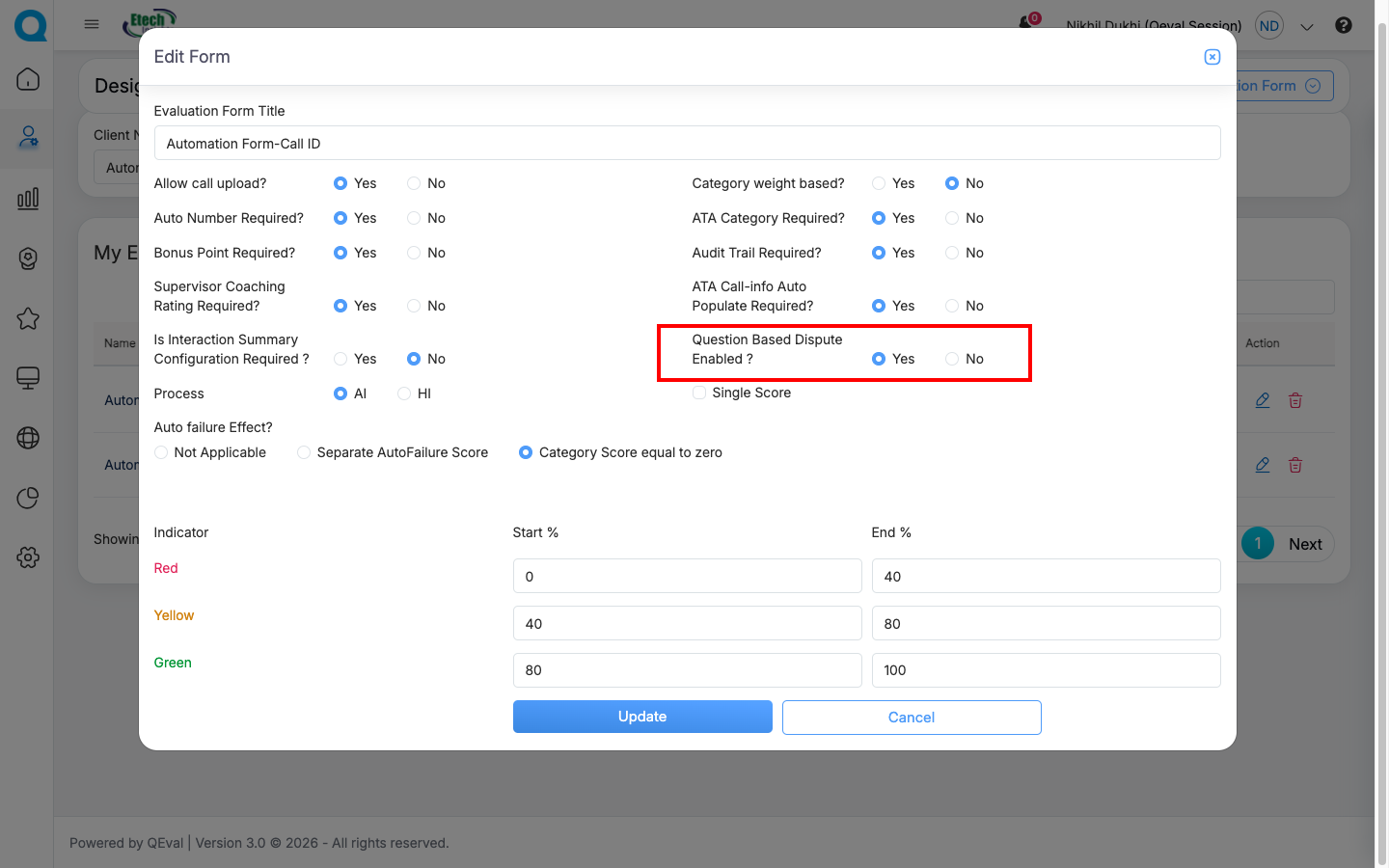
Once enabled, disputes can be raised and processed at the parameter level.
How the Process Works
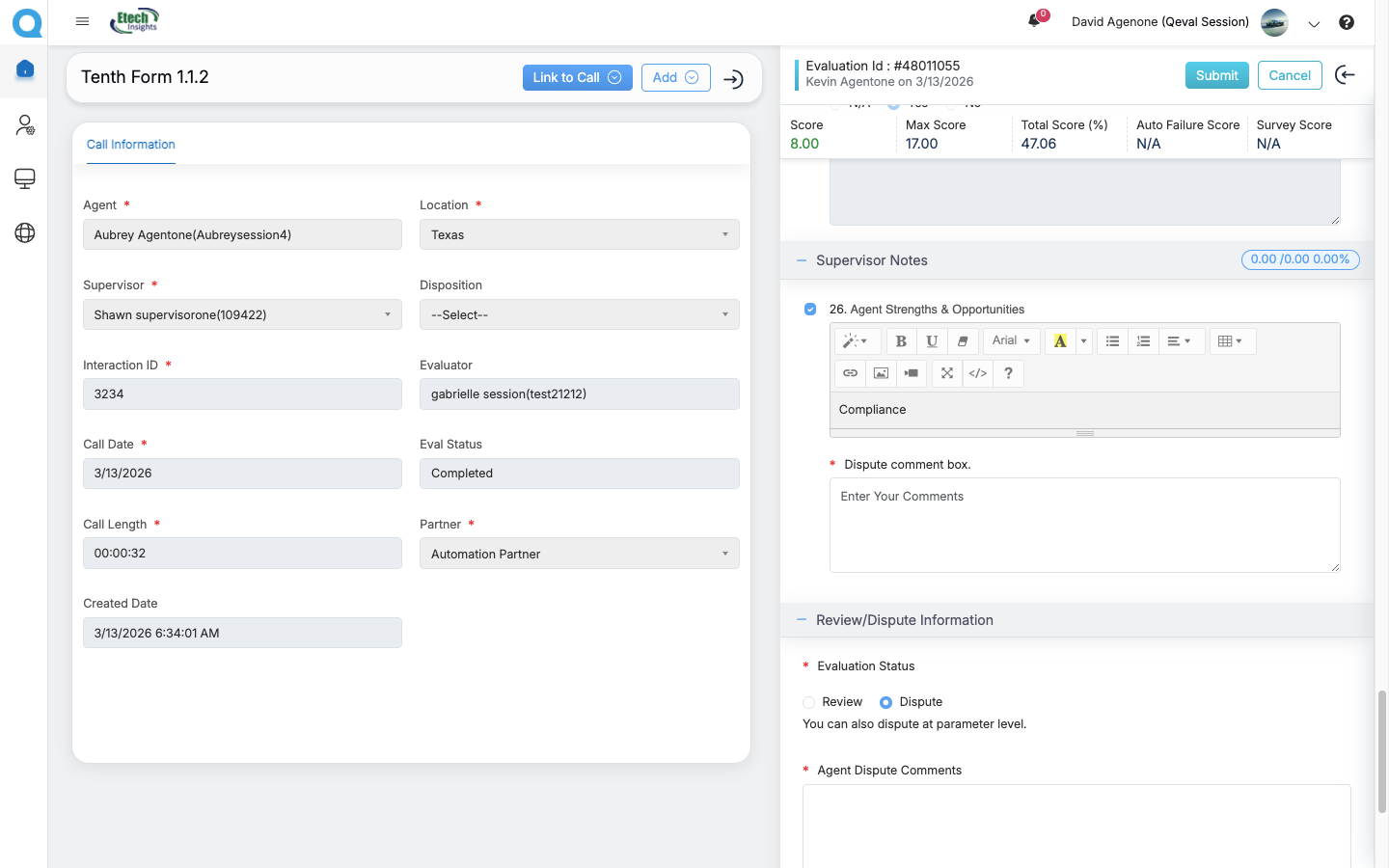
1. Agent Raises a Dispute
When an Agent raises a dispute on specific questions within an evaluation, the dispute is captured at the parameter level and then forwarded to the Supervisor for review.
2. Supervisor Reviews the Dispute
After the Agent submits the dispute, the Supervisor can review the disputed parameters and choose how to proceed.
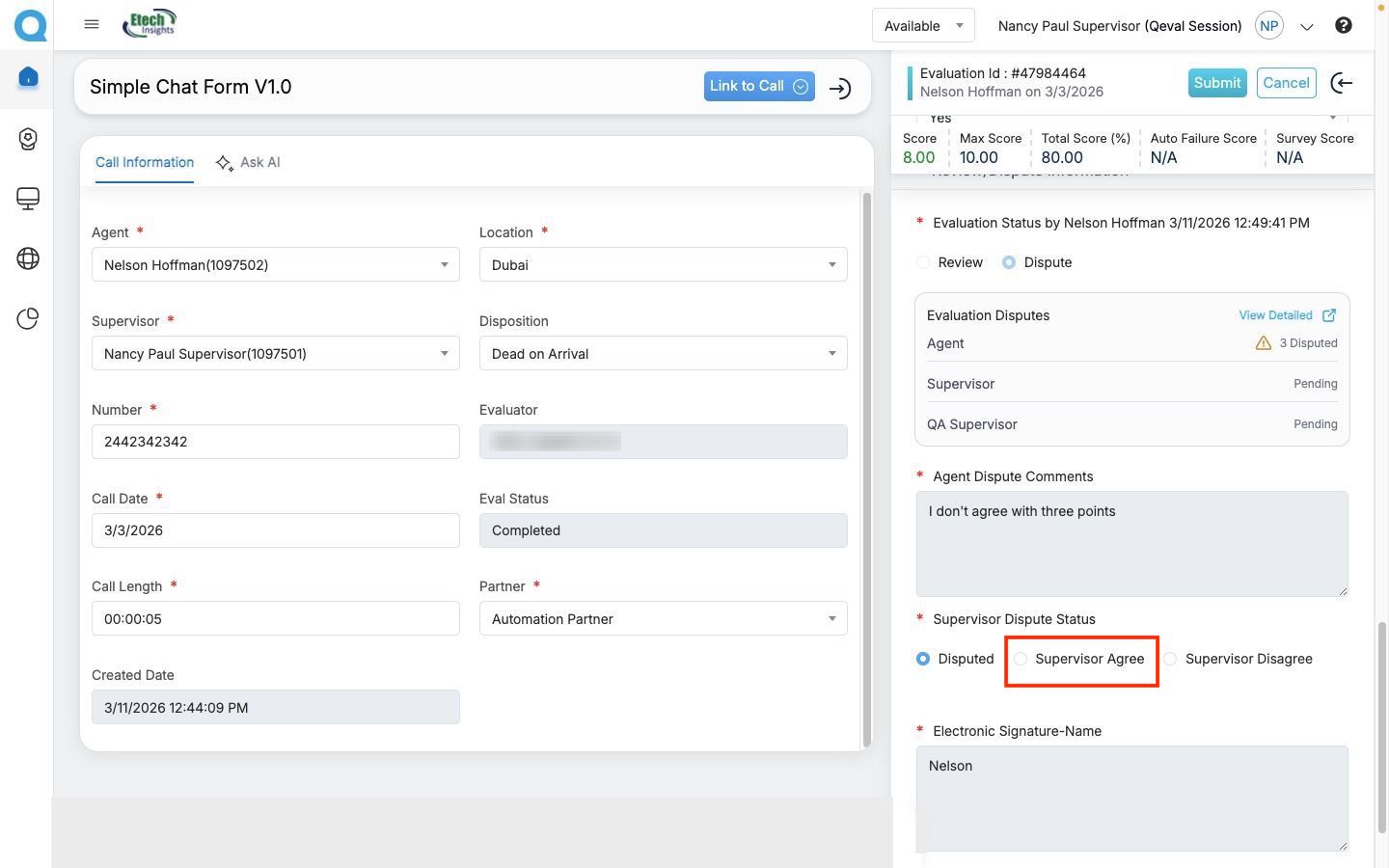
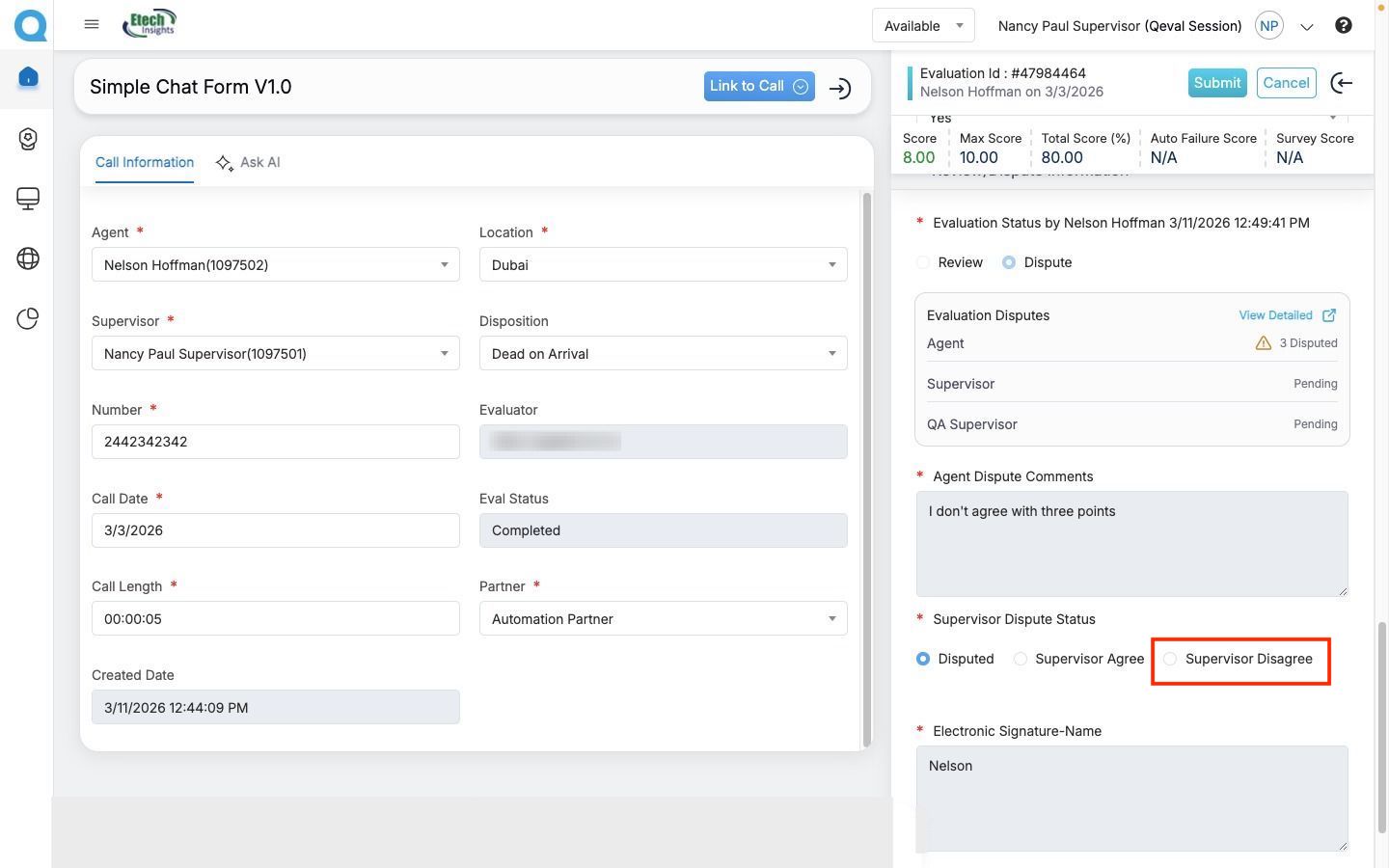
If the Supervisor selects Supervisor Agree radio button, as shown above, a pop-up appears showing all disputed parameters. The Supervisor can then select the relevant checkboxes based on the parameters they want to approve.
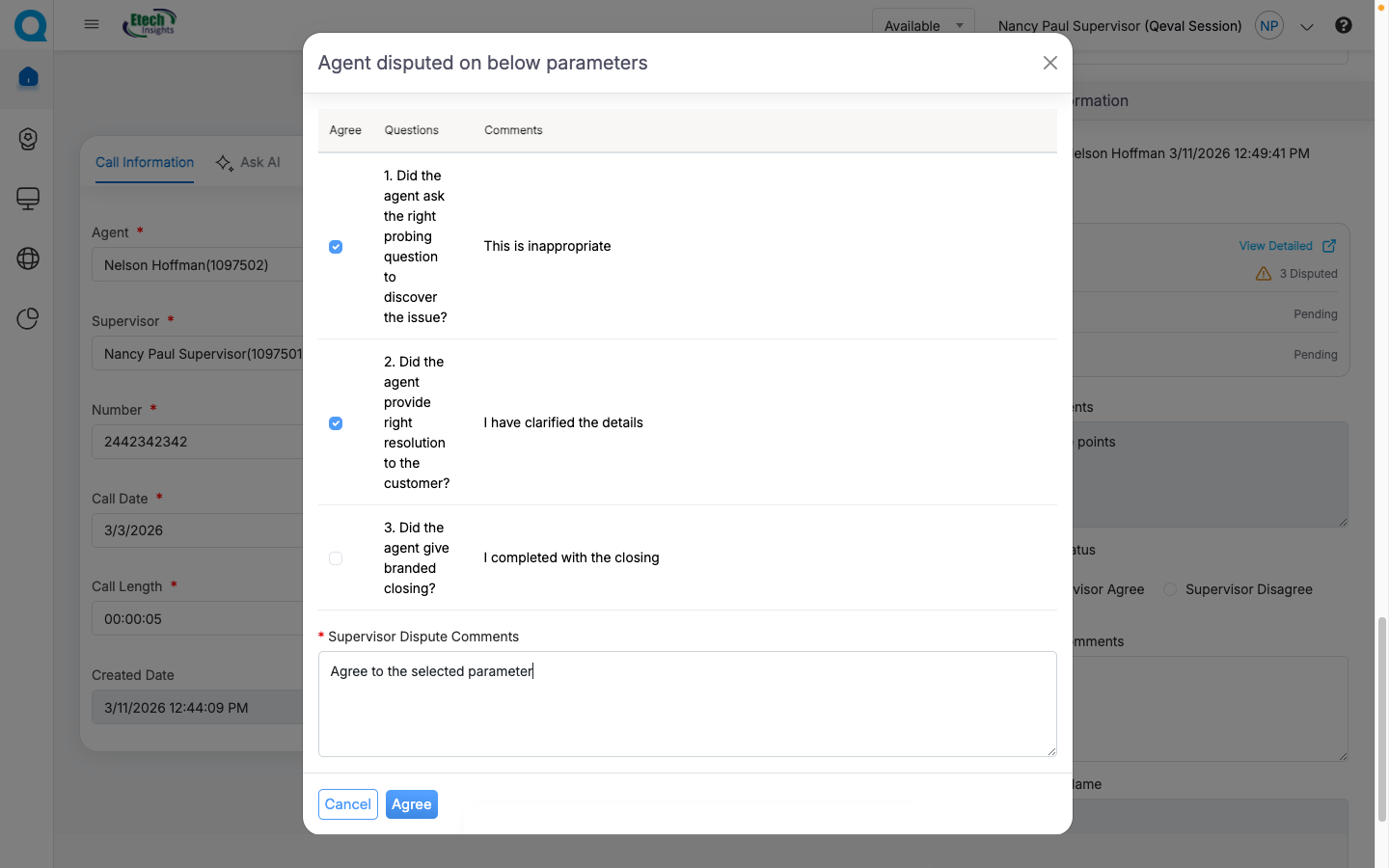
- Selecting all disputed parameters means the dispute is fully agreed.
- Selecting only some disputed parameters means the dispute is partially agreed.
Selecting the Supervisor Disagree radio button in the evaluation rejects the disputed parameters at the Supervisor level.
3. QA Supervisor Reviews Forwarded Parameters
The QA Supervisor can take action only on the disputed parameters that were agreed to by the Supervisor.
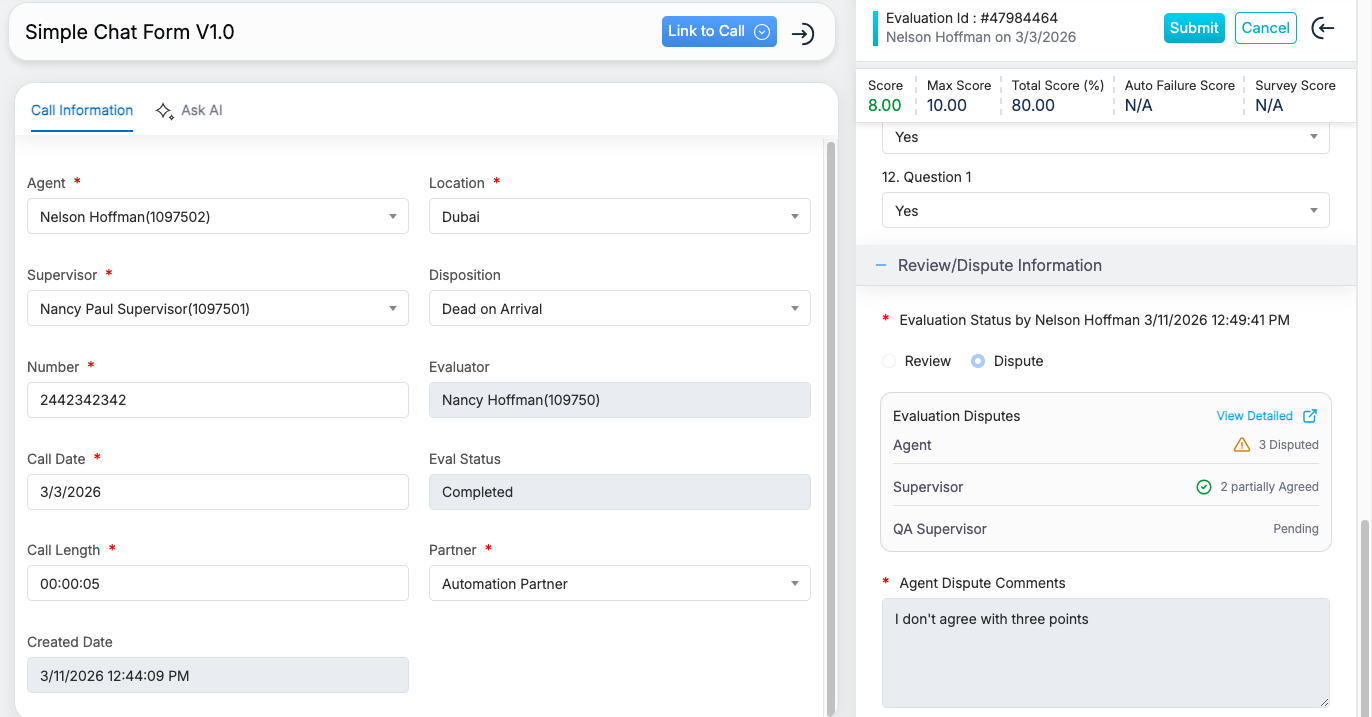
When the QA Supervisor selects the QA Supervisor Accept radio button, a pop-up appears displaying all disputed parameters, with checkboxes available only for those that were agreed to by the Supervisor.
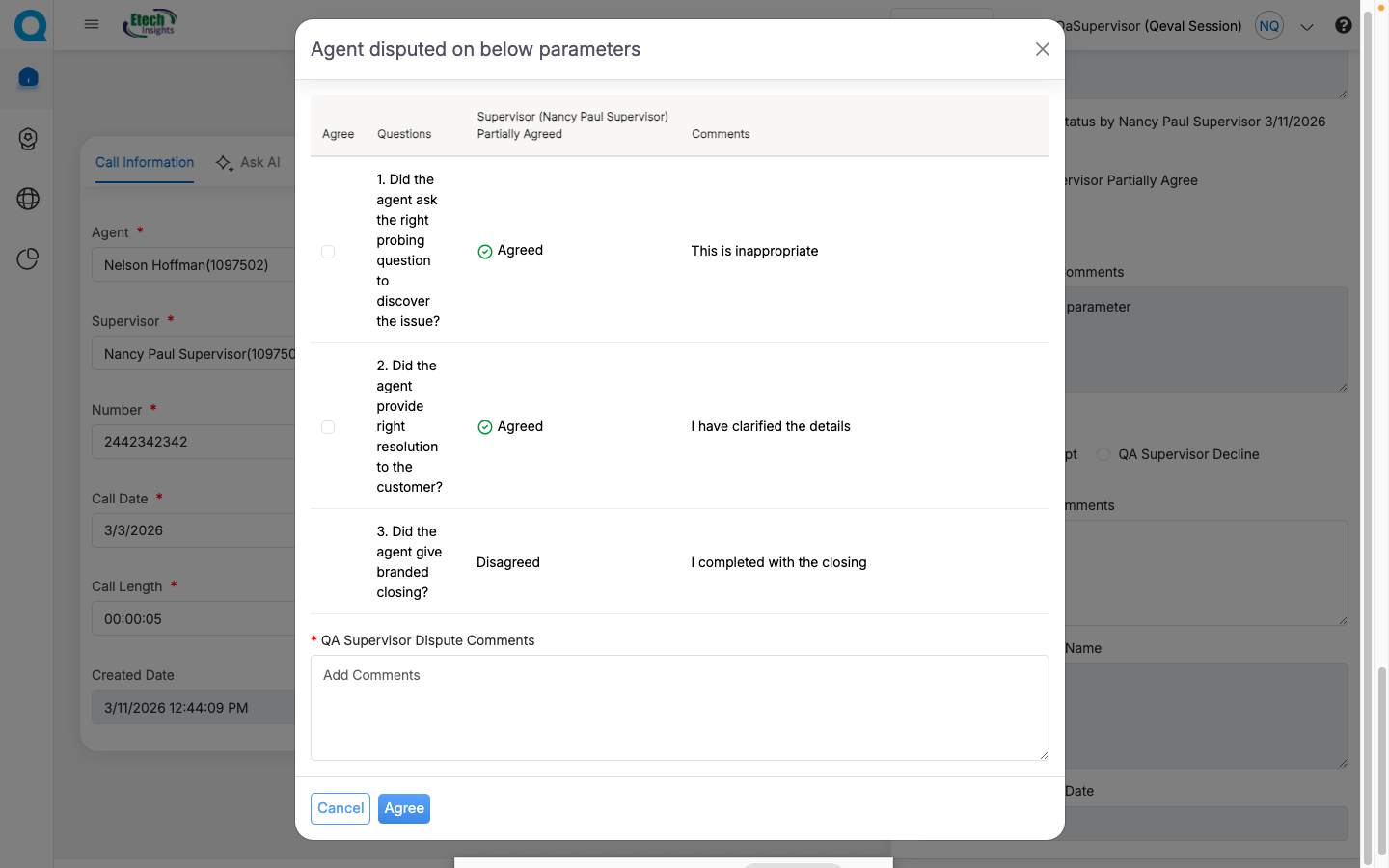
In this pop-up, the QA Supervisor can review the parameters, select the relevant checkboxes for the ones they want to approve, enter QA Supervisor dispute comments, and then click Agree followed by Submit to complete the action.
Selecting all disputed parameters marks the dispute as QA Supervisor Accept, while selecting only some of them marks it as QA Supervisor Partially Accept.
If the QA Supervisor selects the QA Supervisor Decline radio button, the disputed parameters are rejected at the QA Supervisor level.
Evaluation Screen Visibility
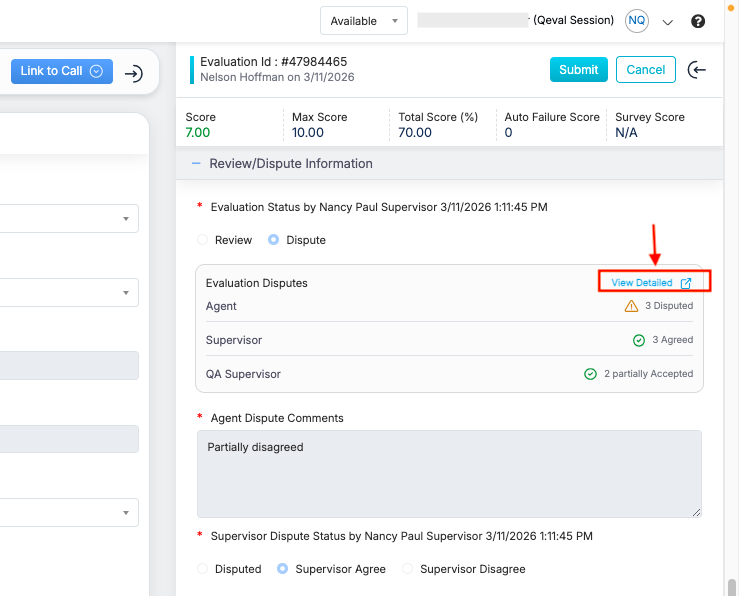
The Evaluation Disputes section now gives clearer visibility into dispute progression across each review level.
Users can view:
- Agent – Number of disputes raised
- Supervisor – Number of disputes agreed or partially agreed
- QA Supervisor – Number of disputes accepted or partially accepted
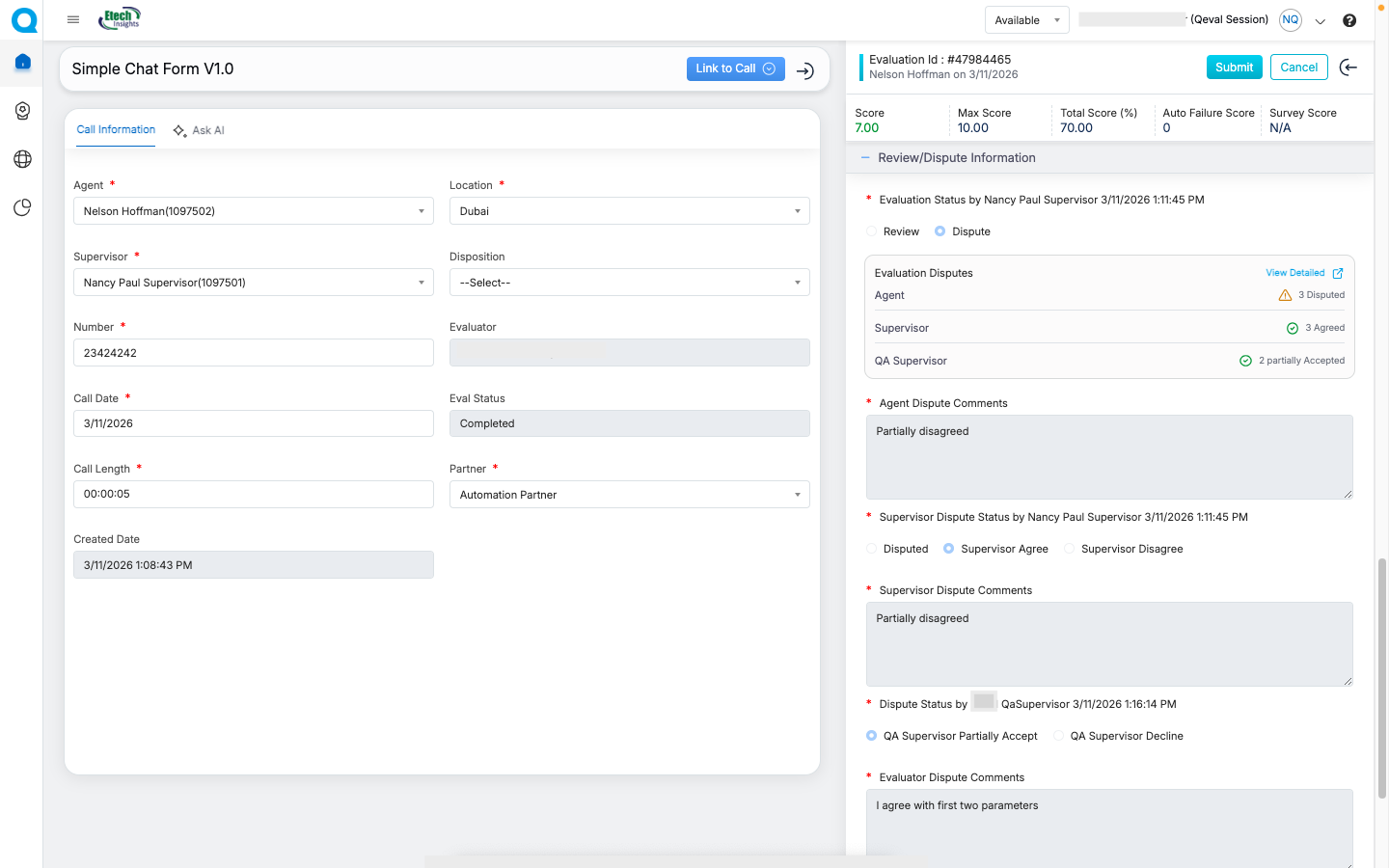
Click on the View Detail button, as highlighted, at any stage of the workflow to open a pop-up displaying parameter-level dispute details.
If the agent’s dispute has been reviewed by the Supervisor and QA Supervisor, the pop-up provides visibility into the Supervisor’s decision (Agree, Partially Agree, or Disagree) and the QA Supervisor’s final action (Accept, Partially Accept, or Decline) for each parameter.
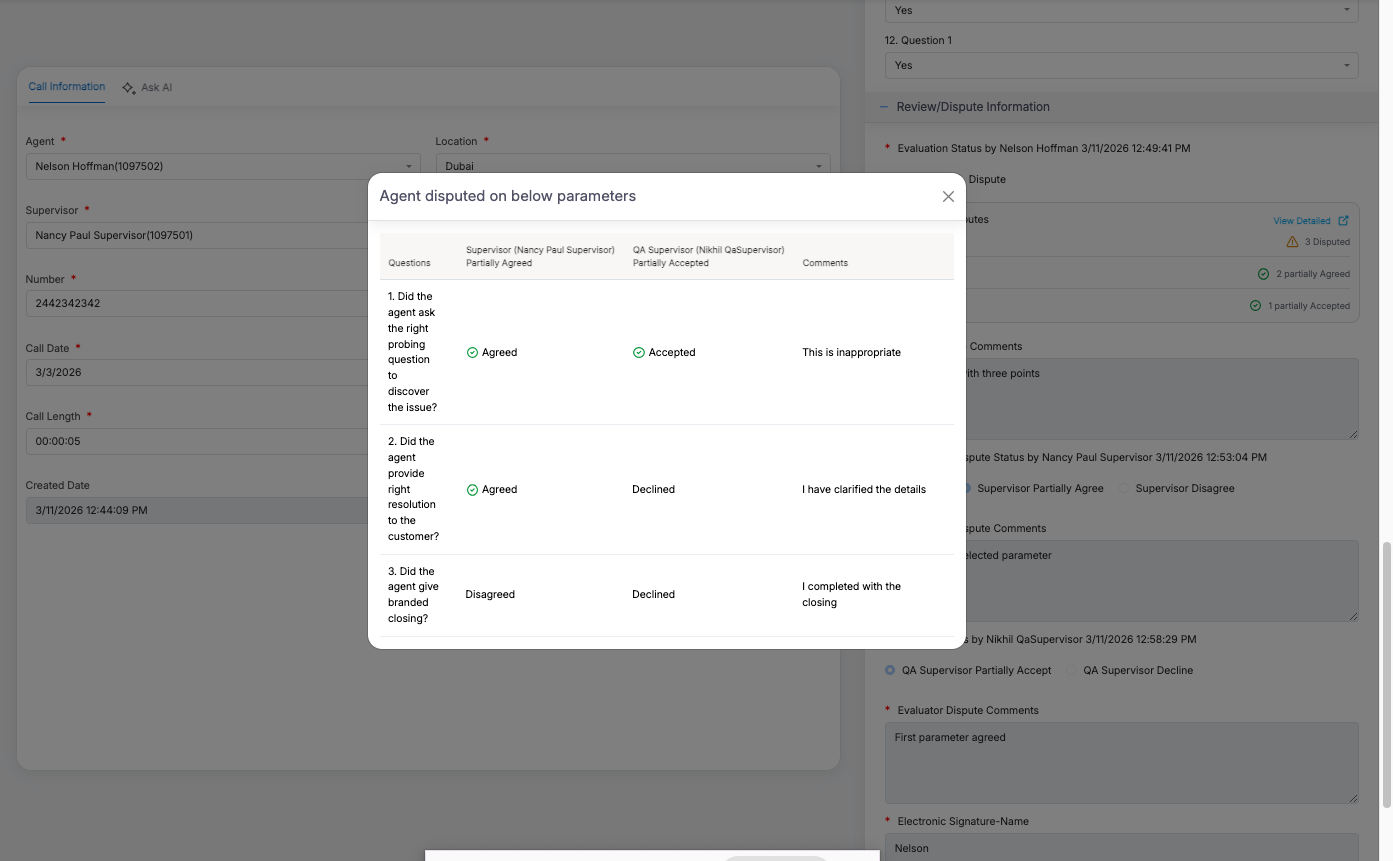
This provides a quick and clear snapshot of how the dispute has progressed through the workflow.
Supervisor-Initiated Dispute Flow when Team Review is Enabled
A simplified dispute workflow is available when the Team Review feature is enabled and a Supervisor raises a dispute on behalf of an Agent.
In this scenario, the system automatically:
- marks the dispute as Supervisor Agreed
- skips the Supervisor approval layer
- routes the dispute directly to the QA Supervisor
This helps eliminate redundant approval by the same role and keeps the dispute review process streamlined while maintaining the workflow hierarchy.
Benefits of Dispute Process Modifiation
- Improves dispute accuracy through question-level review
- Increases transparency across multi-level dispute handling
- Supports partial dispute resolution for greater flexibility
- Reduces unnecessary manual review effort
- Provides clearer visibility into dispute status and progression
Summary
The Dispute Process Modification enhancement makes dispute handling in QEval more structured, flexible, and transparent. By enabling parameter-level dispute review, it allows only the relevant disputed questions to move through the approval workflow, supports partial acceptance, and improves overall dispute tracking for quality teams.
Video